Table of Content:
- The Hidden Problem With Execution-Only Development
- What Product-First Engineering Actually Changes
- Architecture as a Product Decision
- Why Product Thinking Becomes Critical at Scale
- Moving From Vendor Relationship to Product Partnership
- The Strategic Advantage
Product-First Engineering: Why Technology Projects Need Product Thinking to Succeed
BY Nihar Ranjan Rout
11 Jun 2026
4 min READ
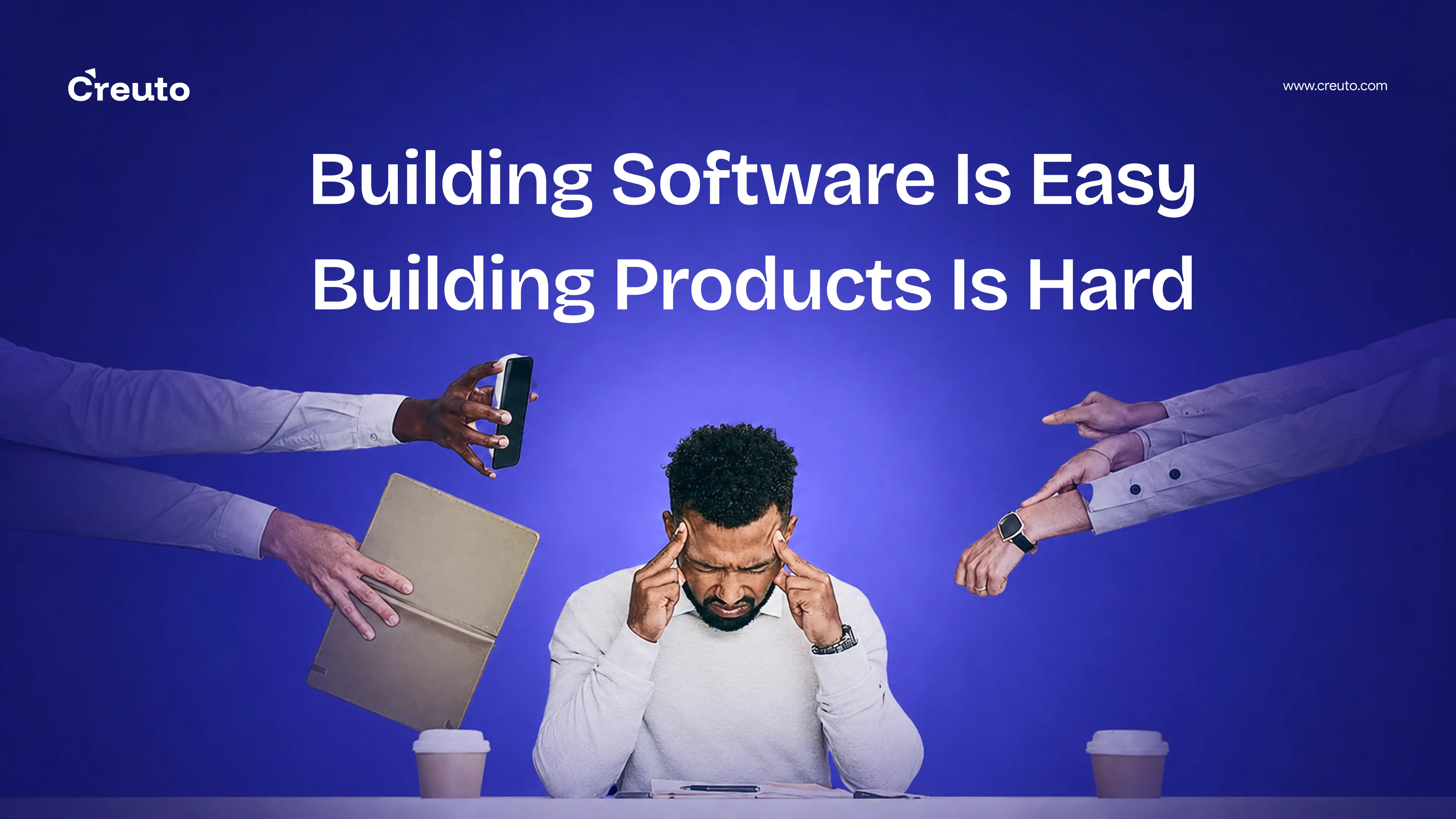
Building software is easier than ever. Building successful products is not.
In today’s market, companies don’t struggle to find development resources. They struggle to build products that users adopt, teams can scale, and businesses can evolve. Many technology initiatives launch successfully from a delivery standpoint; they meet deadlines, check requirement boxes, and pass QA. Yet months later, adoption plateaus, iteration slows, and the system begins to feel rigid.
The issue is rarely technical incompetence. It is the absence of product thinking.
Product-first engineering exists to fill that gap.
The Hidden Problem With Execution-Only Development
Traditional development models prioritize delivery. Requirements are gathered, timelines are defined, and engineering teams execute.
At face value, this seems efficient. But it creates a subtle disconnect.
When engineering is treated purely as a downstream function, several long-term problems begin to emerge:
- Features are built based on assumptions rather than validated user behavior
- Architectural shortcuts are taken to meet timelines
- Roadmaps become rigid commitments instead of learning tools
- Success is measured by “features shipped” instead of “value delivered.”
The result is software that functions technically but struggles strategically. It works, but it doesn’t evolve well.
Over time, iteration slows because the foundation wasn’t designed for adaptability. Technical debt accumulates because early decisions were made without long term context. Innovation becomes expensive.
What Product-First Engineering Actually Changes
Product-first engineering shifts the center of gravity.
Instead of starting with “What are we building?”, it starts with:
- What problem are we solving?
- What outcome defines success?
- How will this system evolve over time?
Engineering decisions are framed within product strategy. Architecture is discussed in terms of future extensibility. Scalability is considered before it becomes urgent. Feature prioritization is informed by real usage data rather than internal assumptions.
This doesn’t slow development; it makes it smarter.
In a product-first model, launch is not the finish line. It is the beginning of a feedback loop. Real-world usage informs iteration—analytics guide roadmap refinement. Engineering remains aligned with business goals rather than drifting into maintenance mode.
Architecture as a Product Decision
One of the biggest distinctions in product-first engineering is how architecture is treated.
In execution-led environments, architecture often serves immediate needs. In product-led environments, architecture is viewed as a strategic enabler.
Every architectural decision answers long-term questions:
- Will this design allow faster feature releases later?
- Can we integrate with external platforms easily?
- What happens when user volume doubles?
- Will this decision increase or reduce technical debt?
These are not abstract engineering concerns; they directly impact growth, agility, and competitiveness.
When architecture is aligned with product strategy, companies maintain velocity without sacrificing stability.
Why Product Thinking Becomes Critical at Scale
In early stages, speed often masks structural issues. A small team can move quickly, even with imperfect systems. But as complexity increases, the cost of weak product thinking multiplies.
Without a product-first mindset:
- Teams spend more time maintaining than innovating
- Feature additions become increasingly risky
- Scaling requires rework instead of extension
- User experience becomes fragmented
Product-first engineering protects against this slowdown. It creates systems designed for iteration, not just implementation.
For high-growth companies, this distinction determines whether engineering remains a growth engine or becomes a bottleneck.
Moving From Vendor Relationship to Product Partnership
The difference between a development vendor and a product engineering partner is not skill; it is orientation.
A vendor focuses on tasks.
A product partner focuses on outcomes.
A vendor executes what is written.
A product partner challenges what should be written.
Product-first engineering requires deeper collaboration. Engineers understand business context. Product decisions consider technical implications early. Strategy and execution evolve together rather than sequentially.
This alignment reduces rework, strengthens scalability, and improves long-term product-market fit.
The Strategic Advantage
In competitive markets, technology is no longer just operational infrastructure. It is the core of differentiation.
Companies that treat engineering as a product function build systems that:
- Adapt faster to user feedback
- Scale without structural friction
- Support experimentation
- Maintain long-term architectural integrity
Product-first engineering ensures that every technical decision supports business growth rather than merely fulfilling a specification.
It transforms technology projects from isolated builds into evolving products designed to compete, adapt, and lead.
Looking for a product engineering partner that thinks beyond delivery?
Work with a team that integrates product strategy, scalable architecture, and continuous iteration into every stage of development. Let’s build solutions designed not just to launch, but to grow, adapt, and win in the market.